.svg)
Lead scraping tools vs pre-built databases: which is better for SMB lead generation?
TLDR
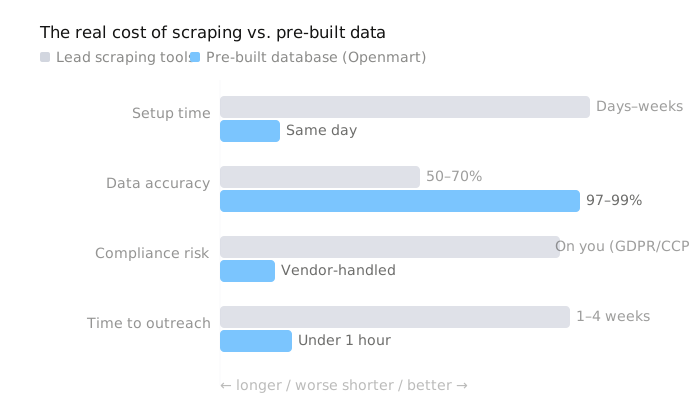
Pre-built databases hand you verified SMB contacts without the engineering overhead of scraping. You sign up and search. Lead scraping tools force you to build and maintain proxy networks, parsing logic, and anti-bot handling, then clean the raw output before anyone makes a call.
Openmart sits at the top of the pre-built category for local business data. The platform holds 200M+ verified contacts across 300+ SMB verticals, hits 97-99% accuracy, and exposes owner-level fields through an API that plugs into your CRM.
Pick a pre-built database when your sales team needs contacts today. Pick a scraping tool when you have engineers who want to own a custom data pipeline. For most SDRs and growth teams targeting local businesses, the choice is the Local Business Database, not a scraper.
The hidden cost of "Free" Scraping
A scraping tool looks cheap when you sign up for a $50 monthly plan. The real bill arrives later. You pay for proxies to dodge anti-bot blocks, engineers to fix parsing logic every time a site changes its layout, and storage for output nobody has verified yet.
Your SDRs feel that cost first. They burn hours deduplicating rows, guessing at missing emails, and flagging dead phone numbers instead of running outreach. Every contact your team manually cleans is a contact you paid for twice.
Raw scraped data also carries the heaviest compliance load. GDPR and CCPA both put the responsibility for lawful data collection on you, the buyer. When you scrape contacts yourself, there is no vendor standing between your team and a regulator's question.
Pre-built databases changed the math for SMB sales teams. You get verified contacts on signup, no proxy networks, no parsing scripts, and a vendor that handles compliance review before the data reaches you. The tradeoff stops being price versus quality and becomes how fast you want to start selling.
This guide compares setup time, accuracy, compliance, cost, and scalability for SMB use cases. Start with How to Build a High-Quality SMB Prospect List.
What are lead Scraping tools?
Lead scraping tools extract business contact data from public web sources like Google Maps, company directories, and LinkedIn profiles. You point the software at a target, and it pulls names, phone numbers, addresses, and whatever else the page exposes.
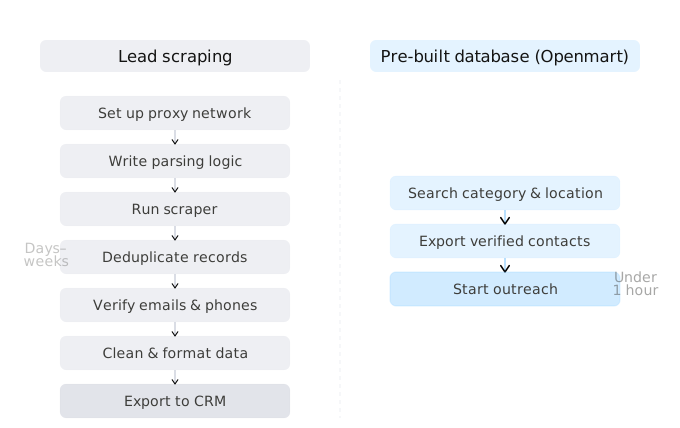
Running a scraper well takes more than clicking start. You need proxies to avoid IP bans, anti-bot handling to get past CAPTCHAs, and parsing logic to turn messy HTML into clean fields. Websites change their layouts constantly, so your scrapers break and you fix them again.
The output lands raw and unverified. Emails come back guessed or missing, phone numbers go stale, and duplicate records pile up. You clean and validate everything before a single SDR touches it.
Bright Data, Outscraper, Apify, and Firecrawl dominate this category. Each one assumes you have engineering time to build pipelines and maintain them, which most SMB sales teams do not.
What are Pre-Built lead databases?
A pre-built lead database hands you verified business contacts the moment you sign up. You search by industry, location, revenue, or headcount through a web UI or pull the same records through an API. The vendor has already cleaned, enriched, and compliance-reviewed every record, so you skip the parsing and deduplication that scraping demands.
No proxies, no anti-bot logic, no maintenance falls on you. The provider owns the data pipeline and absorbs GDPR and CCPA review before a single contact reaches your screen. You start outreach the same day instead of building infrastructure first.
Openmart, Apollo.io, and ZoomInfo all sell this model, but they serve different buyers. Apollo and ZoomInfo index corporate and enterprise contacts. Openmart specializes in local SMB owners with name, email, phone, revenue, and headcount across 300+ verticals. Pick the one whose coverage matches the businesses you actually sell to.
The 5 best tools for SMB lead generation
The five tools below split into two camps. Openmart, Apollo.io, and ZoomInfo sell pre-built databases you can query on signup. Bright Data and Outscraper hand you scraping infrastructure and leave the cleaning to you. Each entry covers who the tool fits, where it falls short, and what you pay.
1. Openmart
Openmart builds the deepest verified dataset for local and small business contacts on the market. Where Apollo.io and ZoomInfo chase corporate org charts, Openmart maps the owner of the plumbing company, the dental practice, and the local retailer. You get the person who signs the check, not a generic info@ inbox.
Quick Overview
Openmart runs a pre-built database of more than 200 million verified local business contacts spanning 300-plus SMB categories. Each record carries owner-level fields including name, email, phone, revenue, and employee count. Accuracy sits at 97-99% across the dataset, which spares your reps from cleaning lists before they dial. The Local Business Database is searchable through a UI or pulled at scale through the API for CRM enrichment and batch jobs. You run no proxies and maintain no scraping stack.
Best For
Openmart fits sales teams selling to local and small businesses inside specific verticals or geographies. If your reps target trades, healthcare practices, restaurants, or retail in defined regions, the depth and accuracy pay off on the first campaign.
Pros
- 200M+ verified SMB contacts across 300+ categories
- 97-99% accuracy, the strongest published rate for local business data
- Owner-level fields including email, phone, revenue, and headcount
- Instant access with no setup, proxies, or maintenance
- API supports batch enrichment and direct CRM integrations
- Covers niche verticals that Apollo.io and ZoomInfo miss, including trades, services, and independent retail
Cons
- Built for local and SMB prospecting, so it won't serve Fortune 500 or enterprise org-chart targeting
- Pricing rises with the volume and categories you pull
Pricing
Openmart offers a trial so you can test coverage in your verticals before committing. Subscription pricing scales by database category and volume, with API access available for teams running CRM and bulk enrichment workflows. Start with the trial to validate accuracy against your own target list.
2. Apollo.io
Apollo.io sits at the center of most mid-market sales stacks, and for good reason. It pairs a 275M-contact database with native sequencing, so your reps prospect and send from one screen. The tradeoff shows up the moment you target small local businesses, where its corporate-first data thins out.
Quick Overview
Apollo.io combines a B2B contact database with built-in outreach tooling. Its 275M+ contacts skew toward corporate and enterprise roles, with strong title and department data. Reps run sequences, sync to the CRM, and prospect on LinkedIn through the Chrome extension without leaving the platform.
Best For
Mid-market and enterprise sales teams running full-cycle outreach get the most from Apollo. If your buyers carry corporate email domains and sit inside org charts, the database and sequencing tools cover the whole motion.
Pros
The contact database is large and rich in corporate firmographics, which helps you segment by company size and department. Native email sequencing and CRM sync keep prospecting and sending in one tool. The Chrome extension pulls contacts straight from LinkedIn profiles as you research.
Cons
SMB and local business coverage runs thin, so prospecting trades, services, or local retail leaves gaps. Owner-level accuracy drops at small businesses, where Apollo often lacks the direct email or phone you need. The free plan limits exports hard, and bulk pulls require a paid tier.
Pricing
Apollo offers a free plan with restricted exports. Paid plans start at $49 per month and scale with seats and credit volume.
3. ZoomInfo
ZoomInfo sells the most complete corporate intelligence on the market, and it prices itself accordingly. If you sell into Fortune 1000 accounts, ZoomInfo gives you firmographics, technographics, and buying signals that no scraping tool matches. If you sell to local plumbers, dentists, or independent retailers, you pay enterprise rates for data that barely covers your market.
Quick Overview
ZoomInfo aggregates company-level data on millions of businesses, then layers on technology stack details and intent signals. The platform tracks which tools a company runs and which topics its buyers research. Sales teams at large organizations use it to prioritize accounts and time their outreach.
Best For
Enterprise sales teams with the budget to justify a five-figure annual contract. ZoomInfo earns its keep when you chase large accounts and need deep firmographic context on each one.
Pros
ZoomInfo enriches records with firmographic and technographic fields that go far beyond name and email. Its intent data flags accounts researching your category before they reach out. The platform syncs cleanly with Salesforce, HubSpot, and most major CRMs.
Cons
Pricing starts around $14,995 per year, which prices out nearly every SMB-focused team. ZoomInfo locks you into annual contracts with no monthly option. Owner-level contacts at small local businesses stay thin, so a plumber or a regional retailer rarely shows up with a verified phone number.
Pricing
ZoomInfo does not publish pricing. You contact sales, and quotes typically start near $14,995 per year and climb with added modules and seats.
4. Bright Data
Bright Data sits at the opposite end of the spectrum from a pre-built database. It hands you the raw infrastructure to scrape the web yourself rather than verified contacts ready for outreach. For a sales team, that distinction decides whether you spend the next quarter selling or building.
Quick Overview
Bright Data runs one of the largest proxy networks available, plus scraping APIs and a marketplace of pre-built datasets. You point its tools at public web sources and pull structured data at scale. None of it works without a developer to configure the pipeline and keep it running as target sites change.
Best For
Engineering teams that need to build custom data pipelines at scale get the most out of Bright Data. If you have data engineers and a specific extraction problem competitors can't solve, the platform earns its place in your stack.
Pros
The proxy network handles large-scale scraping that smaller tools choke on. You can buy pre-built datasets directly rather than scraping from scratch. The platform supports complex multi-step workflows that pull from many sources at once.
Cons
You need developers to implement and maintain anything Bright Data produces. Raw output arrives messy and demands cleaning before an SDR can touch it. Compliance with GDPR and CCPA falls entirely on you, since you control what gets scraped and how it gets used. The product targets data engineers, not sales reps who need owner-level contacts today.
Pricing
Bright Data offers pay-as-you-go and subscription pricing. Meaningful volume starts around $500 per month, before you account for the engineering time to run it.
5. Outscraper
Outscraper sits at the opposite end of the spectrum from a curated database. You point it at Google Maps, it pulls public listings, and you pay for what you extract. There is no stored dataset behind it. Every result comes from a fresh scrape, which makes it useful for quick local pulls and frustrating for anything you need to trust at scale.
Quick Overview
Outscraper scrapes Google Maps and business directories on demand. You enter a query like "plumbers in Austin," and it returns business names, addresses, phone numbers, ratings, and websites from public listings. Nothing is stored or pre-verified. The data reflects whatever Google Maps shows at the moment you run the job.
Best For
Outscraper fits one-off local data pulls where you need a quick list and don't want to stand up scraping infrastructure. A solo SDR mapping out a single metro or vertical gets value here without a developer.
Pros
The UI is genuinely simple. You run a Google Maps query and get a spreadsheet back without writing code. Pay-per-use pricing keeps the entry cost low, so a small batch costs a few dollars. For tight, small requests, results come back fast.
Cons
Outscraper rarely returns verified email addresses. Most listings carry a phone and a website, but owner-level emails are often missing or unconfirmed. Accuracy tracks whatever Google Maps currently displays, so stale listings produce stale data. There is no CRM integration, no enrichment fields like revenue or headcount, and compliance responsibility sits entirely with you.
Pricing
Outscraper runs on a credits-based, pay-per-use model. You buy credits and spend them per record extracted, which suits sporadic small jobs better than ongoing pipeline work.
Summary comparison table
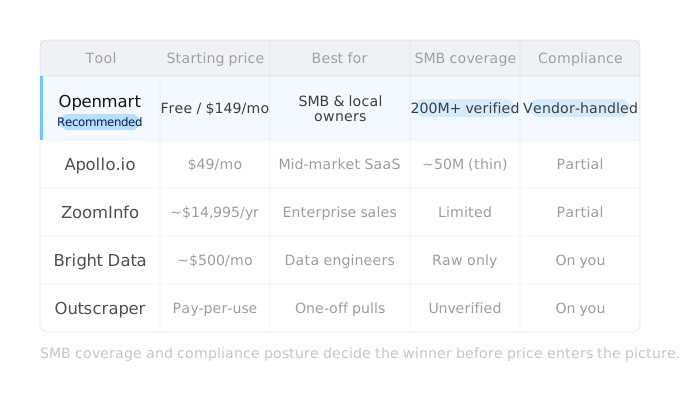
Five tools cover the range from raw scraping infrastructure to fully verified contact databases. The table below maps starting price, ideal user, and the features that separate each one. Read it as a shortlist, not a ranking, since the right pick depends on whether you sell to local SMBs or chase enterprise accounts.
Tool Starting Price Best For Key Features Openmart Trial available SMB/local sales teams 200M+ verified contacts, API, 300+ categories Apollo.io $49/month Mid-market outreach 275M contacts, sequencing, CRM sync ZoomInfo ~$14,995/year Enterprise sales Firmographics, intent data, technographics Bright Data ~$500/month Data engineering teams Proxy network, scraping APIs, datasets Outscraper Pay-per-use One-off local data pulls Google Maps extraction, credits-based
Openmart stands out for sales teams that need owner-level local contacts the same day they sign up. Apollo.io and ZoomInfo serve corporate buyers but thin out at the small-business level. Bright Data and Outscraper hand you raw data and leave the cleaning, enrichment, and compliance work on your plate.
Start enriching your SMB pipeline with verified owner contacts — try Openmart.
Why Openmart leads for SMB lead generation
Openmart is the only platform built specifically for local and SMB owner-level contacts. Apollo.io and ZoomInfo index corporate org charts, where a plumber, a dental clinic, or a regional retailer barely registers. Openmart maps the owner directly, with name, email, phone, revenue, and headcount on each record.
The database holds 200M+ verified contacts across 300+ verticals. That depth covers the trades, local services, and retail niches that competitors treat as edge cases. You search a category and get owners, not a thin list of generic business numbers.
You skip the scraping stack entirely. No proxies to rotate, no parsing logic to maintain, no GDPR or CCPA exposure landing on your team after a Bright Data or Outscraper pull. Openmart reviews compliance before the data reaches you.
The API plugs straight into your CRM and sales automation. You batch-enrich existing records or pull fresh contacts into a sequence without exporting and reimporting CSVs by hand.
Accuracy sits at 97-99% across local business data. You spend less time scrubbing dead emails and bounced numbers, and more time booking meetings. Start with the Local Business Database and begin outreach the same day.
How we chose these tools
We ranked each tool on what an SMB sales team actually needs, not on raw contact counts. Coverage for local businesses came first. A database with 275M contacts means little if it skips the plumbers, dentists, and retail shops you target.
Next we checked owner-level completeness across email, phone, revenue, and headcount. A name without a verified email forces you back into manual research. We timed setup from signup to first usable export, which separated instant-access databases from scraping tools that demand proxies and parsing logic.
Compliance posture mattered too. We reviewed how each vendor handles GDPR and CCPA, and who carries the risk when data is scraped. Pricing was measured at SMB volumes, not enterprise contracts.
We tested API quality and CRM integration paths directly. Accuracy claims got checked against published benchmarks rather than marketing pages, so a 97-99% figure had to hold up under scrutiny.
FAQs
Common questions about lead scraping tools, pre-built databases, and how Openmart fits your SMB prospecting stack.
What is a pre-built lead database?
A pre-built lead database is a curated, verified contact dataset you access through a search interface or API. You skip scraping, proxies, and infrastructure entirely. Openmart gives you 200M+ verified SMB contacts the moment you sign up.
What is a lead scraping tool?
A lead scraping tool extracts contact data from public web sources like business directories and search results. Running one means managing proxies, parsing logic, and constant maintenance as source sites change. The raw output needs cleaning and verification before your reps can use it in outreach.
Is Openmart better than Apollo.io for SMB prospecting?
For SMB and local prospecting, Openmart beats Apollo.io on coverage. Apollo.io concentrates on corporate and enterprise contacts, so its data thins out at the owner level for small businesses. Openmart specializes in local business owner contacts across 300+ verticals, giving you deeper reach into the segment Apollo misses.
How do i choose between scraping tools and a pre-built database?
Pick based on who runs your data and how fast you need contacts. Scraping tools fit engineering teams building custom pipelines they intend to maintain. A pre-built database fits sales teams that need verified contacts today. Weigh setup time, accuracy requirements, compliance risk, and budget before you commit.
Is scraped data compliant with GDPR and CCPA?
Raw scraped data carries real GDPR and CCPA exposure, and the buyer carries that responsibility. When you scrape, you own the legal review of how each record was collected and whether you can contact it. Openmart handles compliance review upfront, so the contacts you pull have already cleared that step.
How quickly can i see results with Openmart?
You can start outreach the same day you sign up. Openmart gives you verified contacts immediately, with no proxies to configure and no data to clean. Search your target vertical, export the records, and your reps begin dialing and emailing within the hour.
What's the difference between Openmart's tiers?
Openmart offers a trial for initial access and testing before you commit. Paid plans scale by database category and contact volume, so you pay for the verticals and reach you actually need. API access supports CRM integration and bulk enrichment for teams running automated workflows.
What are the best alternatives to ZoomInfo for SMB sales teams?
ZoomInfo runs around $14,995 per year, which prices out most SMB-focused teams. Apollo.io has a far lower entry point but weaker coverage of local owner contacts. Openmart is purpose-built for SMB owner data at accessible pricing, making it the strongest ZoomInfo alternative for teams selling into local businesses.
Related articles


Start reaching local businesses today
No credit card required
100 free verified contacts


.png)
